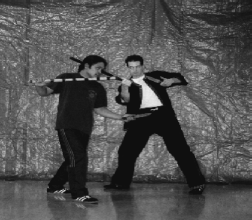
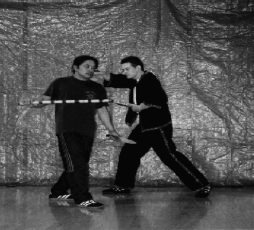
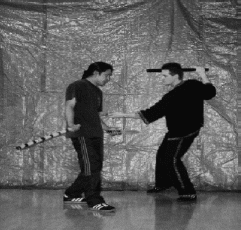
|
Kali - Escrima - Filipino Pesagi Tolong
|
|
Brief History:
Filipino martial arts was flourishing in the Philippines islands at the time of the arrival of the Spanish conquistadors in the
fifteen century. The Filipino martial arts were practiced and established before this time and
its roots can be traced back to the Indonesian empires
and the Hindu Malayan Arab missionaries. Filipino native arts
promote employment of several categories of
self-defense.1.Empty hand tactics Panatukan,
Sikaran 2.Short blade & swords Balaraw,
Sisip, Klewang 3.Clubs
& short sticks Baston,Olisi,Garrote 4.
Staffs, lances, spears Belok, Bankaw, Sibat 5.Projectile weapons, blow guns Sumpit, bow
& arrows Busog pana 6. Shields Taming,
Kalasag. One of the advantages that the
Filipinos found by using the hard stick Garrote
for example, it could be wielded fluently like a
sword and yet deliver a fatal blows by striking the
hand or leg portion of the opponents autonomy.
Delivering such a blow to the bone structure would leave
the enemy not only defenseless but useless. Never to
be able to handle a weapon again. The wound from a
blade could at times be stitched and healed. With
such a fatal blow to the bone with a hard stick it
would fracture the bone into small pieces like an
egg shell. Never to be healed properly again. This
also was an effective defensive in battle against
the Spanish Conquistadors since most of them armed themselves
with protective metal breast plates & helmets to
deflect or stop any sword penetration that may be
aimed at the body and
head.
|
|
|
Commonly known systems and styles throughout the Filipino islands that employ weaponry
defenses can be identified under three names. Kali,
Escrima and Arnis. The word
Escrima comes from the French term "To fence" or "Fencing".
Arnis comes from the Spanish phrase "Arnis De Mano",
(To harness the hands). These two styles came into existence in the Filipino islands during the Spanish colonization period in the sixteenth century. The
ancient word Kali is said to have come
from several recourses some predict it comes from
the two word syllables Kamut which means
"Hand" and Lihok which means
"Movement". In short this translates to Hand Movement with or with out weaponry.
Some believe it comes from the ancient art of India called Velakali or "Sword
play". Were others have predicted that the
Moro's warriors of the southern Philippine resemble
the Hindu Goddess of death called Kali when
they engaged into battle.
|
|
|
Although all three systems are found in the
Philippines and are similar, each one has a specific fighting method that identifies its style of defense. Arnis is characterized by fencing stances and whip like strikes, due to the influence of weaponry, such as the Spanish saber and fencing foil. Kali, is characterized by
angles of attack with flamboyant circular footwork
patterns. This is due from Moro warriors and Indonesian influences. Escrima, employs
fast whip like motions and slashes to its rapture.Other forms of defense and cultural combative arts from the Philippines include
kickboxing also known as Panatukan
(punching) and Sikaran (kicking). This effective fighting
technique is employed in the same fashion as the weaponry portion of the Filipino arts.
|
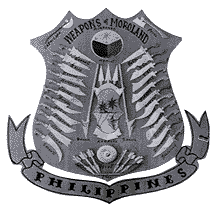 |
|
One of the concepts in Panatukan / Sikaran is to target and destroy the opponents hands
and legs leaving the opponent immobile and unable to deliver
blows. This fighting method along with stick
fighting matches were active among the Filipino cultures as a
sporting event and entertainment. Filipino boxers
would wrapped their hands, forearms and shins with cotton gauze
to enhance their kicking and punching strategies against one another in the ring. Focusing
on to destroy the opponents hands, arm, shoulders, knees and
feet would leave one weaponless unable to throw
blows. Filipino empty hand techniques like Panatukan
move with fluid rhythmic motions that simulate the
same movement as the sword and stick weaponry
portion of the Filipino martial arts .
|
|
|
Wrestling and grappling are other forms of combat that can be found
throughout the Filipino martial arts. Magakos ( to hold), Kunsi and Dongab (to lock) and Tomba (to throw) are rare forms of Filipino wrestling techniques.
Some of these wrestling forms can be found throughout the
Philippines, but mostly were practiced and seen
among the Philippine fishing villages along the coastline
islands.
One of the main concepts that the Filipino martial
arts preaches is to translates the identical motion
from sword, sticks and empty hand while attacking
and defending without having to change the arts
format. Which will create a self defense system that
moves with symmetry against weapons or empty hand
tactics without having to remember many techniques
but only fluid offensive and defensive motions that
destroy what ever it may encounter. But above all
one of the most important aspects that the Filipino
martial arts combined are strong spiritual beliefs
and cultural philosophies where it becomes
synchronized with the practitioner, forever
embracing the Filipino culture within oneself.
|
|
|
|
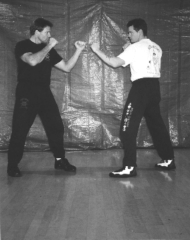
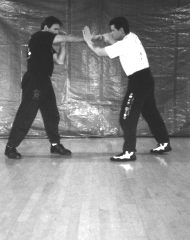
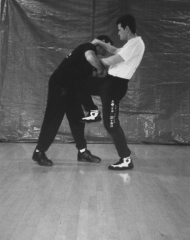
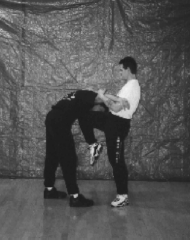
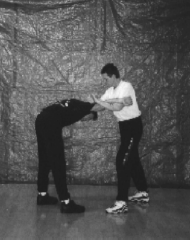
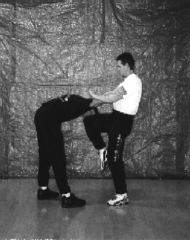
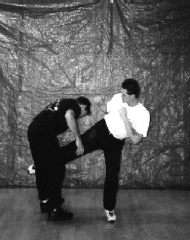
Below: "Panatukan & Sikaran"
Empty hand boxing. Left, opponent throws Dongab (rear cross).
Defender meets the attackers fist with a rear Siko (elbow) directly
to the opponents knuckles disabling the hand. Defender then immediately
strikes with Dalin (forearm strike)
to the opponents jaw. Defender applies a straight arm
bar (Kunsi) for control, followed by double Tuhud (knee)
directly to the opponents jaw. A shin kick (Pagelbut) is
then executed.
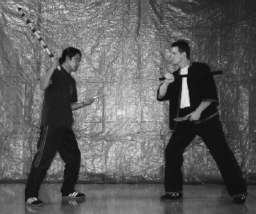
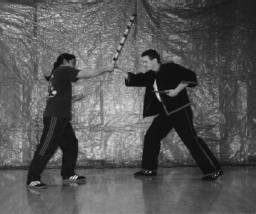
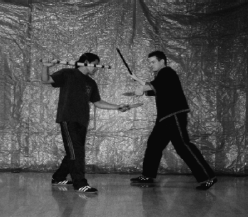
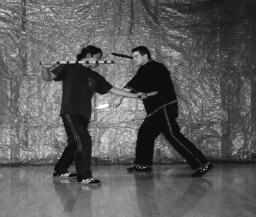
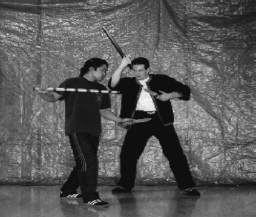
Below: Espada Y Daga (Stick, sword & short blade). Left; opponent throws an over head blow with the Baston (stick) followed by a forward thrust to the defenders stomach with a Dagga (knife). Defender right, meets the opponents stick hand with his stick while parrying the opponents dagga. Defender simultaneously delivers a low thrust with his blade to the opponents midline, following into an Abinico (fan) strike to both sides of the opponents head. A secondary thrust is added at the end of the sequence as well.
|
|||||||||||||||||
 |
|||||||||||||||||
|
|
|||||||||||||||||